

As Europe heads into the 2023/2024 heating season, seemingly little has changed in terms of the issues facing the solid biomass value chain compared to the previous heating season.
Please reload the page
Do you want to read the whole article?
- Six editions per year
- Full access to all digital content
- The E-magazine Bioenergy international
- And more ...
Russia’s relentless war of attrition in Ukraine nears its nineteenth month of criminal carnage. The continued trade sanctions on energy products including woodchips and pellets from Belarus and Russia along with the destruction of the NordStream gas pipelines in the Baltic Sea has European energy utilities leaving no stone unturned to find and secure alternative fuel supplies.
Industry and consumers alike are bracing themselves for another period of volatile and high energy prices on top of continued high inflation and rising interest rates compounded by increasingly extreme weather events. Heating degree days aside, energy poverty has already become a stark reality for millions of European households.
So, what can we expect about the upcoming heating fuel season – will gas and electricity prices bounce back up? Will there be enough biomass fuels? Can the bioenergy sector increase production, muster new sources, and gain market confidence for further expansion?
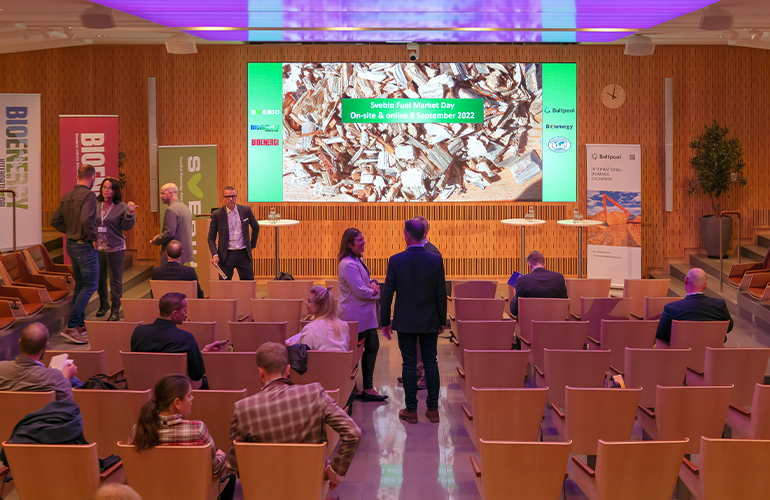
It is against this dynamic doomsday-like backdrop that the 6th edition of the Swedish Bioenergy Association’s (Svebio) annual Fuel Market Day conference will be held.
To be held as an “on-site and online” event on September 6, 2023, at the Royal Academy of Sciences (IVA) conference venue in Stockholm, Sweden, it is an ideal opportunity to get an initiated insight from buyers, sellers, and traders into the current biomass market situation in Northern Europe, and where it might be headed for the coming 2023/2024 heat and power season.
Prominent bioenergy players, experts, and biomass traders will focus on forest fuels and waste wood, as well as pellets and bio-oils sourcing and production, to handle the coming power and heating season.
For instance, Rutger von Essen, Brandberg & Essen, a waste- and biomass fuel distribution, brokering, and advisory service provider will address energy supply market challenges and suggest how the sector can solve them by working together. Climate and Sustainability consultant Anna Rozkosz will discuss bioenergy development and district heating in Poland – still a major user of (imported) coal.
Artis Steinberg from Meza Energija SIA will speak about sourcing forest volumes in Latvia and the neighbouring Baltic States, while Andreas Martinsson from the Swedish forest owners’ Association Södra will highlight the Swedish forest industry’s market situation, the parameters that affect supply, and what the consequences are for the energy sector.
Looking further afield, Andreas Forssell, Eternali will put South America on the map as a potential source of sustainable wood materials and biomass for energy. On the client side, Jens Neren from Mälarenergi AB will speak about taking action – when normal waste wood and forest fuel supply declines while demand increases.
Along with other speakers, presenters, and participants, onsite and online, IVA’s distinguished conference venue is set to continue as a cold-war-era biomass situation room on September 6, 2023 – a dynamic start no doubt for the new CEO of Svebio that has just taken up office.
