

In Germany, biogas plant operator and technology provider EnviTec Biogas AG (EnviTec) has announced that is acquiring BioEnergie Park Güstrow, one of the country's largest biogas plants. Built by EnviTec and operational since 2009, EnviTec also revealed that it will retrofit the plant to produce liquefied biomethane (bioLNG) instead of its current biomethane-to-grid configuration.
Please reload the page
Do you want to read the whole article?
- Six editions per year
- Full access to all digital content
- The E-magazine Bioenergy international
- And more ...
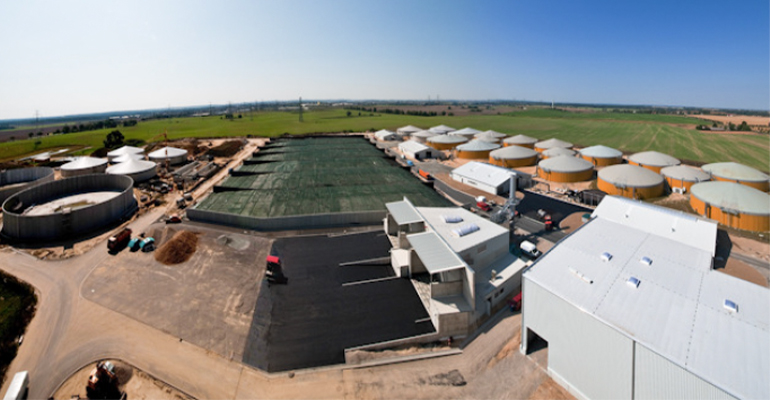
With the acquisition of BioEnergie Park Güstrow, EnviTec is setting the agenda for a sustainable transport sector.
From autumn 2022, the largest biogas plant constructed in Germany to date will be supplying significant quantities of purified bioLNG for greener heavy goods traffic, said Olaf von Lehmden, CEO of EnviTec Biogas.
According to the company, the transaction the value of which has not been disclosed marks a milestone for the transport sector: despite setting emission mitigation goals, Germany has missed its interim target by exactly 100 (!) percent.
This is another reason why our company welcomes the recent ruling from the Federal Constitutional Court: citizens have a basic right to a better climate and German policymakers must now do better. The adoption of a policy to further develop GHG quotas, as announced yesterday, is a positive start, said von Lehmden.
With greenhouse gas (GHG) reductions in the German fuel mix, as required by the Renewable Energy Directive (RED II), this is the first time that green fuel production will be realized ambitiously.
As a result, those placing fuels on the German transportation fuel market must now cut their GHG emissions by 25 percent by 2030 compared with 1990 levels.
For this reason, we have decided to expand further into this sustainable business segment by adding the 20-hectare BioEnergie Park in Güstrow to the plants run in our own operations division, explained Olas von Lehmden.
Adding bioLNG to the portfolio
At the heart of the new business venture lies the production of advanced biofuels in the form of liquefied biomethane (LBG or bioLNG), and the acquisition will enable the annual production of around 9 000 tonnes of bioLNG from autumn 2022.
Previously, this approximately 50 MWth biogas plant fed 500 GWh per annum of biomethane (aka renewable natural gas – RNG) into the 25-bar natural gas grid. The previous owners also ran the plant on around 400 000 tonnes of substrate, which was predominantly maize, but also included whole-plant silage, cereals, and grass silage.
In the new business operating model, input will now be reduced to 150 000 tonnes per annum, agricultural residues will be utilized predominantly and additional combined heat and power (CHP) units will be ‘docked on’ to supply 1.5 MWel of on-site power to the facility. Digestate storage capacity will also be adjusted to match.
Conversion work on the Güstrow site requires investment in a carbon dioxide (CO2) liquefaction plant, an LNG system for biomethane liquefaction as well as extensive capital spending on replacements such as new roofs and agitators totaling EUR 35–40 million.
Initial contracts have already been signed with customers wishing to offer climate-neutral LNG as an alternative fuel in filling stations from autumn 2022.
Our entry into the fuel market aims to provide a counterweight to EVs, which have something of a stranglehold on sustainable transport, said von Lehmden.
To tackle the Herculean task of climate change mitigation, von Lehmden emphasizes the importance of a multi-pronged strategy that considers all options and does not limit itself unnecessarily at the outset.
The addition of a proportion of Bio-LNG or a complete switch to this green fuel can therefore make a considerable contribution to the decarbonization of the rising volume of heavy goods traffic within Europe, von Lehmden said.
He also points to the continued growth of the LNG filling station network since 2018, with 38 such stations currently available for the roughly 1 500 HGVs now running on LNG.
This network is set to expand to 200 filling stations by the end of 2025, noted Olaf von Lehmden, citing recommendations for action from the LNG Taskforce at the German Energy Agency (dena).
