

In Europe, the Committee on Environment, Public Health and Food Safety (ENVI) has adopted its report on the revision of the EU Emissions Trading System (ETS), one of five reports of the “Fit for 55 in 2030 package”, the EU’s plan to reduce greenhouse gas emissions by at least 55 percent by 2030 compared to 1990 levels and have net-zero greenhouse gas (GHG) emissions (climate neutrality) by 2050 in line with the European Climate Law.
Please reload the page
Do you want to read the whole article?
- Six editions per year
- Full access to all digital content
- The E-magazine Bioenergy international
- And more ...
The adopted five reports of the “Fit for 55 in 2030 package” includes the Emissions Trading System (ETS) along with a report on the revision of the ETS as regards aviation, the EU Carbon Border Adjustment Mechanism (CBAM), EU Effort-Sharing Regulation (ESR), and land-use, land-use change, and forestry (LULUCF).
According to a statement, the adopted package is “an important step towards the EU’s goal to become independent from expensive and polluting fossil fuels from Russia well before 2030.”
ETS reform
The report on the revision of the EU Emissions Trading System (ETS) was adopted with 62 votes for, 20 against, and 5 abstentions.
MEPs believe that the ETS is at the core of the European climate policy and has triggered significant reductions in emissions, as a price on greenhouse gas (GHG) emissions is an incentive for economic actors to reduce their emissions and invest in low-carbon technologies.
Increase ambition level and include waste
To incentivize industries to further reduce their emissions and invest in low-carbon technologies, the Emissions Trading System should be reformed and its scope enlarged, say MEPs.
MEPs aim to significantly increase the ambition level compared to the Commission proposal.
A steeper reduction pathway of the EU ETS should provide a clear direction toward achieving the EU’s emissions reduction target for 2030 and the goal of the Paris Agreement to limit global warming to 1.5 degrees.
MEPs want the annual reduction of emission allowances to increase annually by 0,1 percentage points compared to the previous year until 2030, starting from 4,2 percent in the year following the entry into force of this amendment.
MEPs also propose to include municipal waste incineration in the ETS from 2026.
Introduce bonus-malus
To incentivize best-performers and innovation, MEPs want to introduce a bonus-malus system from 2025 so that the most efficient installations in a sector will get additional free allowances.
Those who do not implement the recommendations of the energy audits or certified energy systems or do not establish a decarbonization plan for their installations will lose some or even all of their free allowances.
Extend ETS to the marine sector
As requested several times by Parliament, the ETS would now finally be extended to maritime transport.
MEPs want to cover 100 percent of emissions from intra-European routes as of 2024 and 50 percent of emissions from extra-European routes from and to the EU from 2024 until the end of 2026.

From 2027 emissions from all trips should be covered 100 percent with possible derogations for non-EU countries where coverage could be reduced to 50 percent subject to certain conditions.
MEPs also want other GHG emissions than carbon dioxide (CO2) to be included, such as methane (CH4), and nitrous oxides (NOx).
75 percent of the revenues generated from the auctioning of maritime allowances shall be put into an Ocean Fund to support the transition to an energy-efficient and climate-resilient EU maritime sector.
Phase-out free allowances by 2030
The free allowances in the ETS should be phased out from 2026 and disappear by 2030 when Parliament wants the Carbon Border Adjustment Mechanism (CBAM) to be fully operational – five years earlier than foreseen by the Commission.
The free allowances should be reduced to 90 percent in 2025, 80 percent in 2026, 70 percent in 2027, 50 percent in 2028, 25 percent in 2029, and zero in 2030.
New ETS II for commercial buildings and transport
MEPs propose a separate new emissions trading system for fuel distribution for commercial road transport and buildings shall be established on January 1, 2025.
To prevent citizens from having to bear additional energy costs, private buildings and private transport should not be included in the new ETS before 2029 and only be subject to a thorough assessment by the Commission followed by a new legislative proposal to be agreed upon by Council and Parliament.
MEPs also propose to insert a price cap of EUR 50 so that if the average price of allowances in ETS II exceeds this cap prior to January 1, 2030, 10 million allowances should be released from the Market Stability Reserve.
Revenues from the auctioning of 150 million allowances under the ETS II shall be made available for the Social Climate Fund to address the challenges for low-income families.
Targeted solidarity and support for new tech
The ETS will generate revenues to be used to support the green transition through support to technologies that contribute to energy and resource savings and pollution reductions.
MEPs remind that a well-defined share of the auctioning revenue of the ETS should be used as an own resource to finance the EU budget as a general income. Both EU and member states must spend all of their ETS (I + II) revenues on climate action but cannot be used to support nuclear energy-related activities and technologies.
MEPs support the Commission’s proposal on the Modernisation Fund to improve energy efficiency and modernize the energy systems in less wealthy member states.
The Fund could also finance cross-border projects with low-growth border regions that would otherwise not be eligible for funding.
They also insist that only Member States that have adopted legally binding targets for achieving climate neutrality by 2050 and measures for the phase-out of all fossil fuels should be eligible.
In addition, access to the Modernisation Fund should also be conditional on the respect for the Rule of Law.
MEPs also significantly increased the size of the Innovation Fund (to be renamed to Climate Investment Fund) which supports innovation in technologies that contribute significantly to the decarbonization of the ETS sectors.
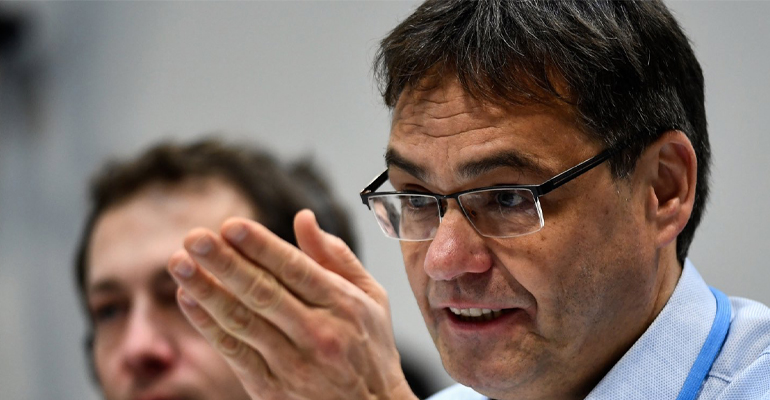
This compromise is good for the climate, jobs, and people in Europe. We support innovation in industry. Companies that go for climate neutrality will be better off while those that continue to pollute without investing, will have a hard time. I am particularly happy, that the important ETS II and the connected Social Climate Fund are out of “intensive care” and even “out of hospital”. Although I would have wished for a broader approach, I am happy that ETS II is alive and kicking, commented rapporteur Dr Peter Liese (EPP, DE) after the vote.
All these reports, including those on CO2 emission standards for cars and vans and the Carbon Offsetting and Reduction Scheme for International Aviation (CORSIA), adopted on May 11, 2022, are scheduled for a vote during the June 6-9, 2022 plenary session, after which Parliament will be ready to start negotiations with EU governments.
The European Parliament’s position on the Market Stability Reserve for the ETS was adopted by the Plenary in April 2022.
