

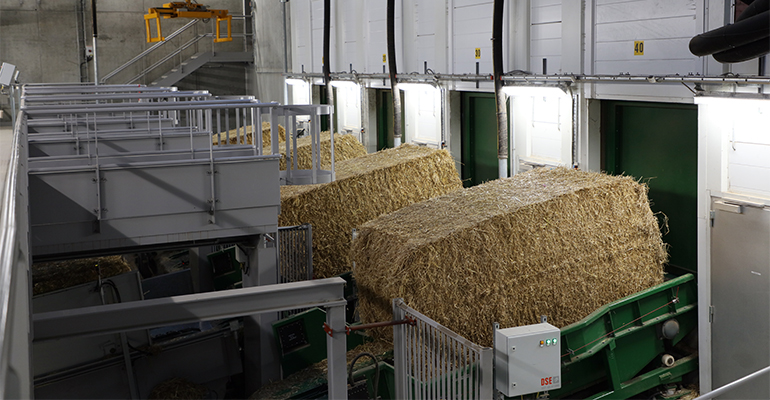
The world is full of people attempting to do something or find a new way against the odds of conventional wisdom. Bioenergy conferences and trade shows are a treasure trove of people, projects, and companies that have at one point or another grasped straws, figuratively and literally, to come up with novel new solutions.
Apart from being the name of a classic studio album by a UK neo-prog band, the idiom “clutching at straws” is usually perceived as a negative, even patronizing one. It is just one step up from “clutching at thin air” which is downright futile.
Depending on the context, clutching, or grasping at straws, typically refers to someone making a baseless argument; taking hold of ideas or chances that might even very slightly help when all else has failed; to trying even the most unlikely means to save oneself; attempting to do something very unlikely to succeed. You get the drift.
The idiom comes from a proverb in St. Thomas More’s “Dialogue of Comfort Against Tribulation” (1534) written by him while imprisoned by King Henry VIII in the Tower of London. It states that “A drowning man will clutch at straws”, hence the sense of life and death desperation – St. Thomas More was subsequently executed for treason so his desperation is entirely understandable.
Straw is indeed a flimsy thing to grab onto, and whilst it may float, a fist full of straws is not likely to keep the weight of a full-grown man, drowning, above the waterline.
But there is more to the clutching-at-straws idiom. To my knowledge, the proverb itself says nothing about whether the man drowned or survived. In other words, irrespective of the context and the implied foretelling of failure, the outcome still remains open, until further notice as it were. That is an important point.
While it may have been panic, the proverbial man had enough presence of mind to a) realize he was in trouble and b) grab something that was floating to try and remedy the situation. More likely he clutched at reeds seeing as he was drowning and thus must have already been in the drink, and bales of cereal straw were unlikely to be fl oating about in rivers and lakes in medieval times. Perhaps he managed to bundle together enough straw to pad his clothing, if he was wearing clothes, and drew “the long straw” (or reed) – a positive idiom – to use as a snorkel.
In fact, one can imagine numerous scenarios, some more outlandish than others but no matter. The point is he was attempting to do something against the odds of conventional thought and experience, forced upon him by circumstance. If he survived, then that solution, however unlikely or far-fetched, was the long straw for him.
That is much closer to Plato’s “necessity is the mother of invention”, i.e. when the need for something becomes essential, one is forced to find ways of getting or achieving it. Survival for More’s proverbial straw-clutching man would certainly be classed as an essential need – if he was attempting suicide, there would be no need to clutch at straws unless he had a change of heart once in the water.
The world is full of people attempting to do something or find a new way against the odds of conventional wisdom. While many fail in their endeavors, and some become Darwin Awards winners, others succeed even becoming Nobel Prize laureates bringing about change or progress.
Bioenergy conferences and trade shows are a treasure trove of people, projects, and companies that have at one point or another grasped straws, figuratively and literally, to come up with novel new solutions,
That is why clutching at straws can draw the longest straw.
