

Finland-headed forest industry major Metsä Group has announced that Metsä Fibre has launched a pre-feasibility study on the renewal of its Kemi pulp mill in northern Finland.
Please reload the page
Do you want to read the whole article?
- Six editions per year
- Full access to all digital content
- The E-magazine Bioenergy international
- And more ...
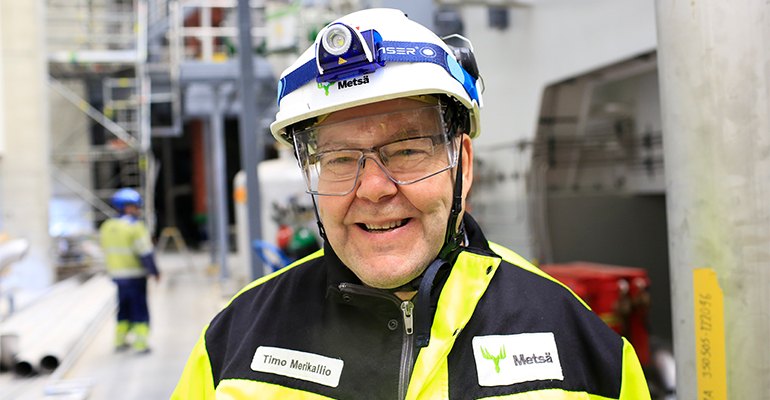
The pre-feasibility study is being headed by Timo Merikallio, who was responsible for the planning and construction of Metsä Group’s bioproduct mill, the largest forest industry investment in Europe, which started up in August 2017 in Äänekoski, Finland. Two options are being investigated:
- Replacing completely the current pulp mill with a new bioproduct mill. Compared to the current mill, the new mill would be clearly larger in terms of production capacity, consumption of wood raw material and impact on employment. The self-sufficiency in electricity would be considerably raised and the bioproduct range would be expanded.
- Extending the life cycle of the current mill by modernizing several departments and maintaining production capacity and wood consumption largely unchanged.
The pre-feasibility study examines, in particular, the availability of wood raw materials and the development potential of Kemi’s industrial infrastructure and logistic connections. The study phase is expected to continue until summer 2019 when decisions on a possible launch of the environmental impact assessment (EIA) and environmental permit procedures would be made.
Metsä Fibre produces softwood and hardwood pulp in the Kemi integrated facility mainly for raw material for tissue paper and kraftliner, and Metsä Board, also part of Metsä Group, produces high-quality kraftliners for packaging end-uses.
The kraftliner production, the annual capacity of which is approximately 420 000 tonnes is highly competitive, and its capacity and product quality have been developed with continuous investments.
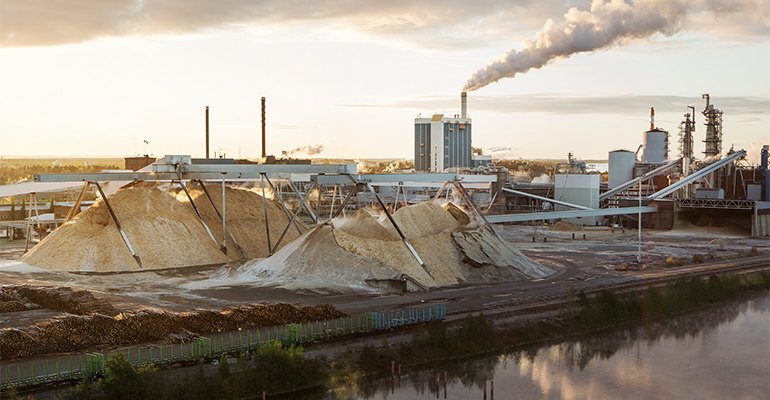
The Kemi pulp mill’s current annual production capacity of softwood and hardwood pulp is approximately 620 000 tonnes. Annually the mill uses more than 3 million m3 of wood. The mill’s self-sufficiency in electricity is nearly 145 percent.
The pulp mill employs approximately 1 500 people in its direct value chain in Finland. The Kemi pulp mill has been rebuilt in stages, and its technology is mainly from the 1980s. The pulp mill has significant investment needs over the next decade.
The shift from fossil-based economy towards sustainable bioeconomy is accelerating. The forest industry and Metsä Group have a significant role in this development. In the launched study, we will evaluate the preconditions for a very significant investment in Kemi, Finland, said Ilkka Hämälä, President, and CEO, Metsä Group.
