

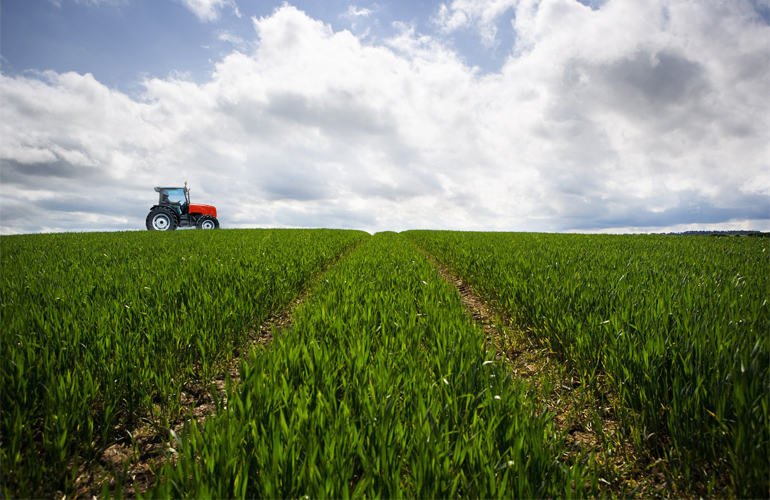
In Spain, multinational oil and gas firm Compañía Española de Petróleos, S.A.U. (Cepsa), a Mubadala Group company and the Spanish National Research Council (CSIC) have signed an agreement to research the viability of planting energy cover crops in different rural areas across the country.
Please reload the page
Do you want to read the whole article?
- Six editions per year
- Full access to all digital content
- The E-magazine Bioenergy international
- And more ...
These crops are known as “cover crops” because they protect the soil from erosion between the main planting periods, and “energy crops” because they provide the organic feedstock needed to produce second-generation (2G) biofuels.
First-of-its-kind collaboration
The objective of this collaboration, the first of its kind between the scientific institution and an energy company, is to conduct a technical and economic study of different parts of the country and determine where these crops could be planted.
In addition to analyzing their viability, the study, which will last one year, will determine the most suitable types of crops for each area and their carbon dioxide (CO2) absorption capacity, identifying the most beneficial in environmental terms.
This will complement Cepsa’s sources of raw materials to produce this type of biofuels, one of the industry’s main challenges, while also promoting Spain’s greater autonomy in terms of energy supply and independence.
The objective of this agreement with the CSIC is to expand the availability of circular raw materials for the production of second-generation biofuels. This will help to further the decarbonization of sectors where electrification is complex, such as heavy ground, maritime, or air transport, while generating new economic and development opportunities for Spain’s rural areas, said Javier Antúnez, Cepsa’s Biofuels Manager.
The participation of CSIC in this project is part of the organization’s policy of transferring its research results to the private sector, the main way for public research to have a real impact on society.
This initiative is led by the Green Horizon Interdisciplinary Thematic Platform and involves, from a multidisciplinary perspective, researchers from three CSIC centers: the Institute for Sustainable Agriculture (IAS), the National Institute of Agricultural and Food Research and Technology (INIA), and the Instituto de la Grasa (IG).
In Spain, there is potential for growing non-food crops on land not used for food production, or at times of the year when the soil is not cultivated. Research groups from the CSIC have spent years studying new crops that can provide raw materials for the production of biofuels as part of the sustainable management of natural resources such as soil and water. In addition to providing renewable energy sources, these crops help protect the soil from erosion and improve the carbon balance on farms, said Leonardo Velasco, a researcher at the CSIC’s Institute for Sustainable Agriculture (IAS).
Opportunity for rural development
Cover crops are grown between the planting periods of main crops in order to protect the soil from erosion.
They also offer other advantages for agriculture and environmental protection, such as increased soil fertility by providing nutrients and improving soil texture, higher rainwater retention capacity, and greater CO2 absorption.
These crops can also be grown on degraded lands, such as those affected by fires, helping them to recover.
These crops are considered “energy crops” because part of the biomass produced can be used to generate energy, in addition to being used to produce livestock feed. As the harvested product is not needed for food, it can be used to produce second-generation biofuels.
Growing this crop type helps farmers to maximize the profitability of the same piece of land, increasing its quality, diversifying their income, and maintaining their activity throughout the year.
In addition to generating raw materials for second-generation biofuel production, planting this type of crop is an incentive for people to remain in Spain’s depopulated rural areas, as it creates jobs and boosts economic development.
Introduced in 2023, the Common Agricultural Policy (CAP) rewards farmers and livestock farmers who carry out at least one voluntary sustainable practice, including the development of cover crops among woody crops, such as olive groves or fruit tree plantations.
2G biofuels to decarbonize transport
According to Cepsa, the use of biofuels can reduce CO2 emissions by up to 90 percent compared to conventional fossil fuels, making them a key element in enabling a fair energy transition and promoting the decarbonization of transportation, especially in sectors where electrification is complex, such as heavy road, air, and maritime transportation.
This agreement is in line with Cepsa’s goal of leading 2G biofuel manufacturing in Spain and Portugal by 2030.
The company will then have an annual production capacity of 2.5 million tonnes of biofuels, of which 800 000 tonnes will be sustainable aviation fuel (SAF).
