

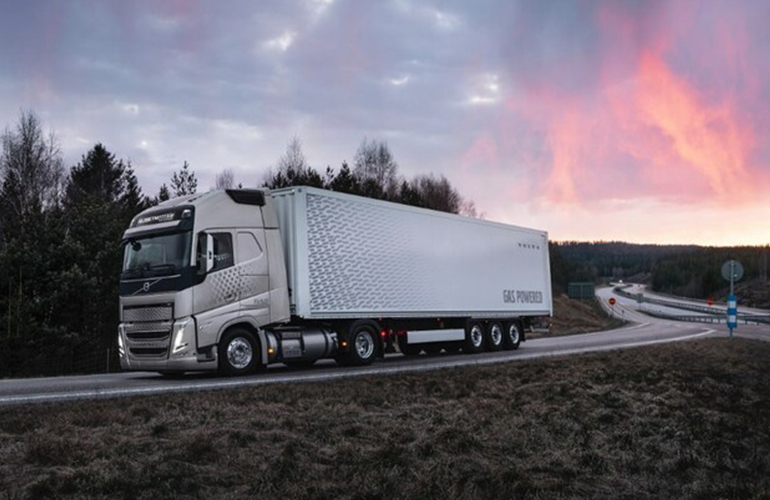
Sweden-headed mobility major Volvo Group and Canada-headed Westport Fuel Systems Inc.(Westport), a leading supplier of advanced alternative fuel delivery systems and components for the global transportation industry, have signed a non-binding Letter of Intent (LoI) to establish a joint venture (JV) to accelerate the commercialization and global adoption of Westport's "HPDI" fuel system technology for long-haul and off-road applications.
Please reload the page
Do you want to read the whole article?
- Six editions per year
- Full access to all digital content
- The E-magazine Bioenergy international
- And more ...
Volvo and Westport share the vision of creating sustainable transport solutions to accelerate the decarbonization efforts of global trucking, engine, and equipment manufacturers for their customers and society.
Supporting technology for carbon reduction
Westport’s High-Pressure Direct Injection (HPDI) fuel system is a high-performance solution supporting significant carbon reductions in hard-to-abate sectors like heavy-duty and off-road mobility.
HPDI enables the world’s trucking and off-road equipment manufacturers to address the challenges of meeting the regulatory requirements of Euro 7 and the US Environmental Protection Agency (EPA) while offering end users affordable options that are powered by carbon neutral fuels like biomethane (aka renewable natural gas – RNG), zero carbon fuels like green hydrogen and other renewable fuels.
Westport is advancing fuel system solutions to help our customers affordably address the most pressing challenge of carbon reduction while continuing to utilize existing manufacturing infrastructure, said David Johnson, CEO at Westport.
Facts
About HPDI
The Westport High-Pressure Direct Injection (HPDI) fuel system is a complete system offering OEMs the flexibility to differentiate their biomethane, natural gas, hydrogen, and other fuel product lines easily while also maintaining maximum commonality with their conventional diesel-fueled products.
Designed for heavy long-haul and distribution operations as well as off-road applications like mining, rail, and marine, HPDI fuel systems offers an alternative with low climate impact while meeting the highest industry standards for performance, fuel efficiency, and operating range required for heavy-duty transport.
The HPDI fuel system consists of a fully integrated “tank to tip” solution, based on diesel technology. At the heart of the engine is a revolutionary patented injector with a dual concentric needle design. A small amount of pilot fuel (which can be fossil diesel fuel or a biodiesel/renewable diesel fuel) is injected into the cylinder prior to the gas, to initiate the ignition.
Engines can achieve higher horsepower and torque by using direct injection and relying on high pressures in the combustion chamber for ignition. Thus, the characteristic of the engine using an HPDI fuel system is very similar to a diesel engine.
A truck equipped with the HPDI system is an ideal solution for fleets wanting to reduce their fuel costs and offer decarbonized regional and long-distance road transport solutions to their customers with no compromise on vehicle performance.
Boost HPDI commercialization
While Volvo will be a key customer of the joint venture, the joint venture’s mandate will be to enhance the commercialization of HPDI through the addition of new trucking and equipment manufacturers as customers.
Westport will contribute current HPDI assets and activities including related fixed assets, intellectual property, and business into the joint venture.
Volvo will acquire a 45 percent interest in the joint venture for the sum of approximately US$28 million (≈ SEK 300 million) plus up to an additional US$45 million (≈ SEK 500 million) depending on the performance of the joint venture.
Volvo’s ambition is to reach net-zero greenhouse gas (GHG) emission-enabled products, solutions, and services by 2040.
The company believes that the future will demand diverse propulsion solutions for diverse applications to meet customers’ needs and environmental demands, and advocates for a three-pronged approach: battery-electric, fuel-cell electric, and internal combustion engines (ICEs).
Decarbonization with internal combustion engines running on renewable fuels, especially with HPDI, plays an important part in sustainable solutions. HPDI has been on the road in Volvo trucks for over five years and is a proven technology that allows customers to significantly reduce carbon dioxide emissions in bioLNG applications here and now and is a potential avenue for hydrogen, said Lars Stenqvist, Chief Technology Officer of Volvo.
Completion of the joint venture is conditional on the successful negotiations and execution of a definitive investment agreement, joint venture agreement, supply agreement, and development agreement.
The joint venture is expected to launch in the first half of 2024.
The joint venture with Volvo is a natural extension of both companies’ commitment to accelerating global carbon reduction and we are proud to partner with such a bold supporter of the future of the internal combustion engine. Combining our expertise strengthens HPDI’s position in the market and underscores Westport’s commitment to developing affordable fuel system technology that supports significant CO2 reductions in hard-to-abate sectors like heavy-duty transport and off-road applications, including a pathway to power equipment with zero carbon fuels like hydrogen, ended David Johnson.
