

The European Bank for Reconstruction and Development (EBRD) has announced that it is strengthening the resilience of Jordan’s infrastructure by providing a new financing package worth EUR 14.7 million to the Greater Amman Municipality (GAM). The funds will be used to upgrade Amman’s only landfill facility and buy a new gas engine.
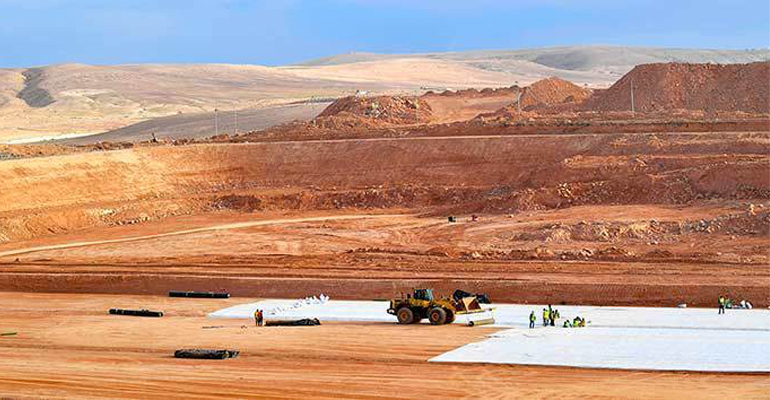
The coronavirus (COVID-19) pandemic and the Syrian refugee crisis have placed unprecedented strain on the Al Ghabawi landfill, the capital’s only landfill facility. The GAM has seen a significant increase in the amounts of solid waste received, causing the cells at the landfill to be filled faster than expected.
The new funds will support the GAM in constructing a sixth cell to increase the capacity of the Al Ghabawi landfill by 6 million m3 and meet the city’s needs for another three years.
This package is being extended under the EBRD’s GAM Solid Waste Crisis Response Programme. It consists of a JOD 7.9 million EBRD loan to the GAM, backed by a EUR 5 million grant from the European Union (EU).
New LFG engine
The funds will also support the purchase and installation of an additional gas engine to be connected to the existing landfill gas (LFG) system. The new gas engine is expected to have a capacity of 1.6 MW, increasing total power capacity to 6.4 MW.
The extension of the LFG utilization system from three to four engines will reduce greenhouse gas (GHG) emissions by 73 574 tonnes of carbon dioxide equivalents (CO2eq) per year, of which 5 796 tonnes can be attributed to the substitution of electricity from the grid.
Once capped and connected to the existing LFG collection and utilization system, the new engine will increase the volume of LFG collected and enable the GAM to reduce its operating costs by offsetting its energy bill against the clean energy produced.
Since the start of its operations in Jordan in 2012, the EBRD has invested more than EUR 1.5 billion in the country through 61 projects. Of this, some EUR 180 million of EBRD financing and EUR 130 million in grants have been mobilized under the EBRD’s Municipal Resilience Refugee Response Framework.
