

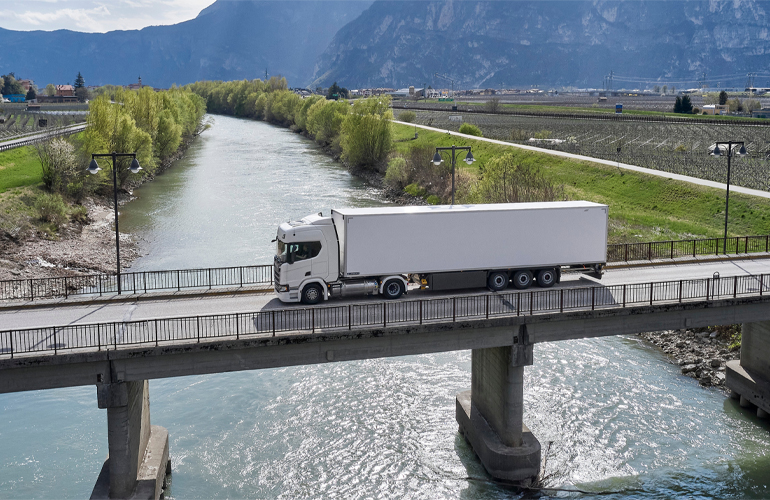
Sweden-headed heavy-duty vehicle (HDV) and powertrain original equipment manufacturer (OEM) Scania AB has recently launched new biomethane-powered versions of its OC13 13-litre engine that boasts 5 percent fuel savings and all the range needed for long-haul operations compared to its diesel sibling.
The interest in locally produced biomethane (aka renewable natural gas – RNG) fuels such as bioLNG or bioCNG for heavy-duty vehicles (HDVs) such as trucks is rapidly increasing.
Many companies and transport buyers have the ambition to decarbonize their road transport here and now.
Biomethane filling station networks are expanding rapidly across Europe, driven by increased demand and by major players in the fuel industry.
Reducing the carbon dioxide (CO2) footprint is no longer something only ‘green’ companies are doing to win public acclaim: it is a pure necessity for most kinds of serious transporters and all available means must be used.
Biomethane-based solutions are readily available via rapidly growing fuel-station networks and CO2 emissions can be reduced by up to 90 percent from a well-to-wheel perspective.
Biomethane fuels are definitely the solution for those customers who want to start a decarbonisation journey without any delay. Our biogas engines cover a wide span of industries and applications. A 40-tonne tractor-and-trailer combination can achieve ranges of up to 1,400 km when specified with the biggest bioLNG tank solutions that we offer. Add the 460 hp and the 2,300 Nm our OC13 engine offers to the equation and you have a perfect tool for European long-haul, said Ola Henriksson, Senior Product Manager for Renewable Fuels at Scania Trucks.
New biogas OC13 engine
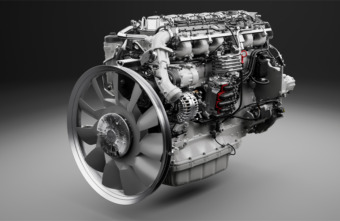
The new biomethane engines are based on the renowned 13-litre gas engine that Scania has offered for several years.
By increasing their engine power levels to 420 hp or 460 hp respectively and preparing them for future legal demands, Scania is demonstrating its intention to gain an even bigger market share in the quest for decarbonization.
Pairing Scania’s new biomethane engines with the gearbox (G25) and the rear axle from the Super-based powertrain proved to be a success.
When we paired these components, it soon became obvious that we had a hit in the making. Just as the Super engine benefits from the increased spread in the G25 gearbox, so do the biogas engines. When paired with the Scania Opticruise gearbox and the new axles, the biogas engines can operate very close to their ‘sweet spot’ most of the time. Put together, it results in 5 percent fuel savings from this powertrain, said Ola Henriksson
Fuel savings of 5 percent are confirmed and with bioLNG or bioCNG there will be a CO2 reduction of up to 90 percent, something that is achievable here and now.
With the CO2 reductions, the driveability, and the ranges we offer now, I am convinced that more customers will recognize what a great solution this is. There are so many obvious pros and virtually no cons at all. And the driver can also enjoy a significantly lower noise level, ended Ola Henriksson.
