

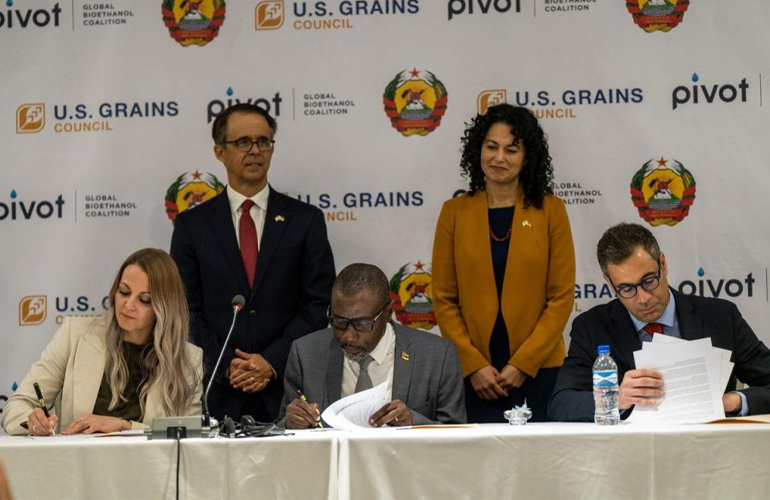
On February 29, 2024, the US Grains Council (USGC) convened high-level US and Mozambican government officials, industry professionals, and other stakeholders to discuss the benefits and challenges of using ethanol biofuel to meet the country’s clean energy goals in both cooking and transportation.
On February 29, 2024, the US Grains Council (USGC) convened high-level US and Mozambican government officials, industry professionals, and other stakeholders to discuss the benefits and challenges of using ethanol biofuel to meet the country’s clean energy goals in both cooking and transportation.
The event – “Fueling Forward to Sustainable Energy” – focused on the use of ethanol (alcohol) for clean cooking.
In pursuing ethanol-burning stoves for household cooking that produce no soot or smoke, users can limit air-borne health risks and air pollution.
Participants included Mozambique governmental representatives from the energy, environment, and agriculture sectors, along with representatives from local fuel distributors, technology companies, national refineries, agro-industrial industries, oil and gas, finance, logistics, and transportation.
Biofuels best practice
During the event, the USGC, Pivot Clean Energy Co (Pivot), and the Mozambique Ministry of Mineral Resources and Energy (MIREME) signed a Memorandum of Understanding (MoU) in the presence of US Department of Agriculture (USDA) Deputy Secretary of Agriculture Xochitl Torres Small and US Ambassador Peter H. Vrooman.
Today’s conversation is critical to helping families in Mozambique use a healthier cooking fuel, which in turn provides cleaner air for everyone. Using biofuels in cooking is one of many great examples of how agriculture provides real solutions to everyday challenges. As all of us face increased disaster, drought, and other climate change impacts, USDA is committed to making a difference through viable, climate-smart practices and sharing them with partners around the globe, Deputy Secretary Xochitl Torres Small said.
The MoU establishes a cooperative partnership to exchange technical expertise and best practices related to the biofuels industry and clean energy policy development.
Through this MoU signing, the Council supports the Mozambique government in its pursuit of ethanol blending initiatives and clean cooking development. This MoU seeks to further strengthen the relationship between biofuels experts from the United States and Mozambique governmental and private stakeholders. We offer a sincere thank you to MIREME, Pivot, the USDA’s Foreign Agriculture Service, local embassy staff, and the US Department of Commerce for their continued partnership in this endeavor, said Mohamed Salah Bouthour, USGC Deputy Regional Director – Africa at USGC.
Also discussed were topics including ethanol’s role in the global energy transition; ethanol’s contribution to greenhouse gas (GHG) reduction; the ethanol production chain; ethanol pathways for domestic production; local clean cooking initiatives and standards applications, and regional challenges and opportunities towards ethanol policy.
This partnership shows the initiative of the Mozambican government to meet the goals established in their Economic Stimulus Measures Package (PAE reforms) around biofuels development. We are pleased to see momentum gaining in this area and look forward to working with multiple parties to support solutions for clean energy in the transportation and clean cooking sectors that will have widespread benefits in many adjacent sectors, including the potential to lower carbon emissions, improve health outcomes and increase local, green jobs, said Alicia El Mamouni, Executive Director of Pivot.
Developing biofuel blending regulations
In recent months, Mozambique has discussed strategies for producing clean energy to reduce pollution and costs in the import of fossil fuels.
While the government of Mozambique has mandated that ethanol and biodiesel be blended with gasoline and diesel, it is still developing its standards and blending regulations.
A 10 percent ethanol mandate exists in Mozambique and the country has planned the development of a strong oil and agriculture economy that expects to use biofuels to facilitate this growth.
Biofuel blending reforms will reduce the country’s reliance on fuel imports and create a market for Mozambique’s large agricultural sector to meet the growing demand for biofuels.
The Council is delighted to collaborate with Mozambique and Pivot to share our experiences from the U.S. ethanol industry and provide technical assistance. This partnership will underpin the growth of the ethanol industry in Mozambique and across the region, Mohamed Salah Bouthour said.
