

Ahead of the annual World Economic Forum (WEF) Annual Meeting 2024 set to take place January 15 - 19, in Davos-Klosters, Switzerland, three leading industrial clusters from China, France, and the United States (US) have joined the World Economic Forum’s Transitioning Industrial Clusters initiative, a network of 20 industrial clusters in ten countries and four continents that have committed to reaching net zero.
The Transitioning Industrial Clusters initiative is a World Economic Forum community, launched in collaboration with Accenture and EPRI, that aims to support industrial clusters on their paths to net zero.
The initiative has grown rapidly since its inception in 2021 at COP26 and all 20 signatory clusters have pledged to improve their governance models and reduce their carbon footprints.
This group now represents a combined potential for carbon dioxide equivalent (CO2eq) emissions reduction of 626 million tonnes, equivalent to the annual emissions of a country like Australia.
The signatory clusters make a direct contribution of US$362 billion to the gross domestic product (GDP) and create or protect 3.4 million jobs.
As our initiative welcomes new clusters from China, France, and the US, we are excited to see growing interest from the public sector stakeholders both at the national as well as local level. The establishment of innovative private-public partnerships is key for the transformation of industrial regions, not only in terms of emissions reduction but also job retention and creation as well as economic development, said Roberto Bocca, Head of Energy, Materials and Infrastructure Centre, WEF.
Updated report
A new edition of a World Economic Forum “Transitioning Industrial Clusters Annual Report“ launched on January 11, 2024, shows how the decarbonization of the industrial sector, which accounts for 30 percent of global CO2 emissions, could be achieved while spurring economic growth and job creation.
While warning that “the world is in a race against time to decarbonize”, the new report highlights progress made on the net-zero vision and how these lessons can be applied to the broader industrial sector, a key carbon emitter globally.
Using three signatory clusters as actionable case studies, the report charts a path across four key pillars – partnerships, policy, technology, and finance. Financing, in particular, is a critical step to kick-start net-zero journeys and scale up impact, while creating jobs and spurring growth, as per the new findings.
The report also highlights significant challenges to achieving net zero within the industrial sector, including policy framework gaps, the need to unlock financing to support the deployment and scaling of new infrastructure and technologies, and a lack of fit-for-purpose governance models, among others.
The urgent need to continue to strengthen public-private partnerships and cross-border collaboration is critical to address these challenges, as per the report.
Port-anchored industrial clusters
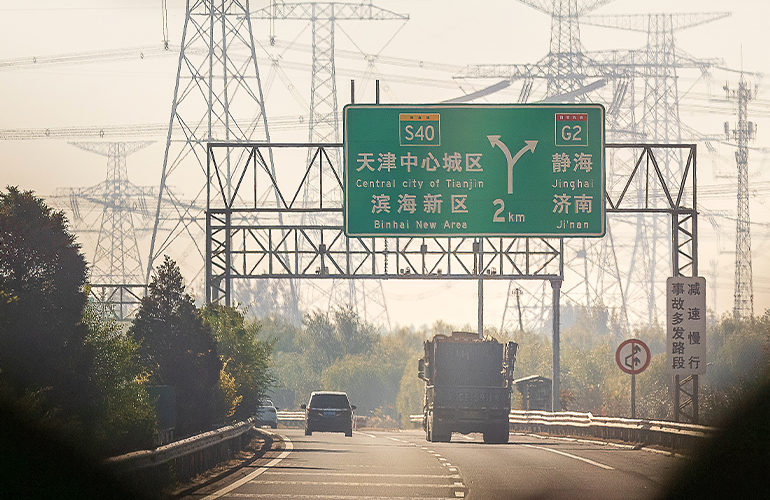
The initiative’s three new signatories, all port-anchored industrial clusters, are Tianjin Economic and Technological Development Area (TEDA), China; DKarbonation – Dunkerque Industrial Cluster, France; and Louisiana Future Energy Cluster (LFEC), United States.
The data points in the report and announcement represent CO2eq emissions, jobs, and GDP/economic data reported by a limited number of signatory clusters. Work is underway to elaborate a comparable methodology for signatory industrial clusters to report on CO2eq emissions, jobs, and GDP.
Tianjin Economic and Technological Development Area (TEDA) includes major industries such as high-end manufacturing, information technology, new energy sources, chemical materials, and healthcare.
It has introduced a series of resource recycling projects for metals and industrial waste and is adopting electrification, solar PV, onshore wind, and geothermal power to meet its energy needs.
The cluster, which has received national recognition for sustainability initiatives, is also exploring carbon capture, usage, and storage (CCUS) technology. TEDA had 16 million tonnes of CO2 emissions in 2020 (Scope 1 & 2) and expects US$90 billion of annual GDP contribution and 600,000 jobs created and maintained by 2060.
TEDA is committed to joining this initiative and actively participating in exchanges to learn from international, advanced industrial clusters. By studying their experiences, TEDA aims to facilitate the acceleration of technological and managerial innovations in Chinese industrial parks. This, in turn, will expedite the transition of Chinese industrial clusters towards a future characterized by net-zero carbon emissions, said You Tiancheng, Chairman of TEDA Administrative Commission.
DKarbonation: Dunkerque Industrial Cluster is a major industrial basin, which covers port, steel, aluminum, material and manufacturing, cement, gas, low-carbon hydrogen production, and electric mobility, and operates a leading European energy facility.
DKarbonation had 16 million tonnes of CO2 emissions in 2021 (Scope 1) and expects US$1.2 billion of annual GDP contribution by 2050 and 31,950 jobs protected and created by 2030-2040.
In joining the World Economic Forum initiative, Dunkirk shows that it remains committed to reaching net zero by 2050 and being at the forefront of tackling global warming. We are also committed to helping build a low-carbon economy and society, particularly in the areas of mobility and resource management, housing, transport, and training so that each and every person has access to jobs in the industry of the 21st century, said Patrice Vergriete, French Minister of Housing, Dunkerque Urban Community President and Chairman, Euraénergie.
Louisiana Future Energy Cluster (LFEC) was created by the H2theFuture Coalition, which is led by Greater New Orleans, Inc. and supported by business development efforts of the Baton Rouge Area Chamber.
It builds on Louisiana’s role as a top US oil and natural gas producer, with its large concentration of industrial petrochemical facilities and its consumption of approximately 30 percent of US hydrogen produced today.
LFEC seeks to support Louisiana in its effort to become a leader in the clean-energy evolution, building a strong foundation for biofuels, green and blue hydrogen and ammonia, offshore wind power development, advanced recycling, and advanced carbon capture and sequestration.
LFEC had 143 million tonnes of CO2 emissions from operations in 2021, US$54.3 billion of GDP generated in 2021; and 34,546 new high-paying direct jobs through decarbonization.
The energy sector in Louisiana is leading the way toward a net-zero future and we look forward to learning how to make more progress on decarbonization from our peers in this initiative. We aim to not only reduce carbon emissions but also create green jobs that are accessible to all residents. Together, we can create a cleaner, greener, and more economically prosperous world for future generations, said Russell Richardson, Baton Rouge Area Chamber SVP of Business Development.
