

US-headed ExxonMobil Corporation, one of the largest publicly traded international energy companies, has announced that its majority-owned Canadian affiliate, Imperial Oil Ltd., is moving forward with plans to produce renewable diesel at a new complex at its Strathcona refinery in Edmonton, Alberta (AB). The complex would utilize locally grown plant-based feedstock and hydrogen with carbon capture and storage (CCS) as part of the manufacturing process.
Please reload the page
Do you want to read the whole article?
- Six editions per year
- Full access to all digital content
- The E-magazine Bioenergy international
- And more ...
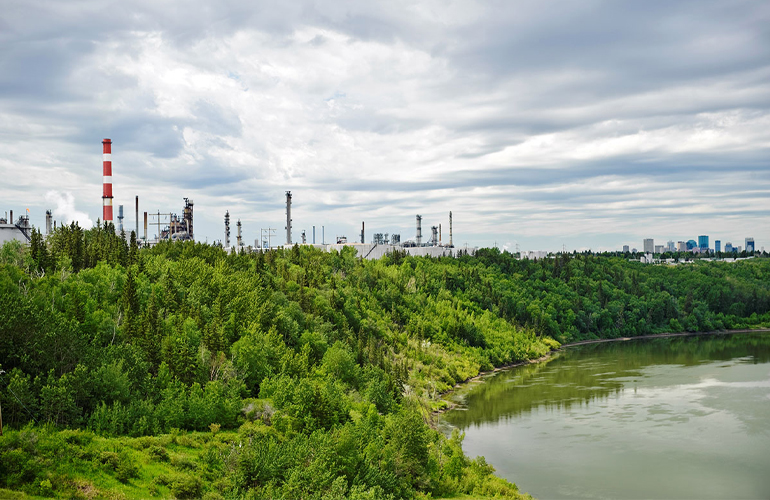
The planned renewable diesel production process will utilize “blue hydrogen”, which is produced from natural gas with carbon capture and storage (CCS). Production of blue hydrogen has been shown to have substantially reduced greenhouse gas (GHG) emissions compared to conventionally produced hydrogen.
Approximately 500 000 tonnes of carbon dioxide (CO2) are expected to be captured each year utilizing CCS. The blue hydrogen and biofeedstock will be combined with a proprietary catalyst to produce premium low-carbon diesel fuel.
The Strathcona renewable diesel project is part of ExxonMobil’s plans to provide more than 40 000 barrels per day of low-emissions fuels by 2025. In the US, the company has agreed to purchase up to 5 million barrels of renewable diesel annually from Global Clean Energy to supply markets in California (CA).
Based on an analysis of California Air Resources Board (CARB) data, renewable diesel from various non-petroleum feedstocks can provide life-cycle GHG emissions reductions of approximately 40 percent to 80 percent compared to petroleum-based diesel.
Canada’s proposed low-carbon fuel policies incentivize the development of lower-emission fuels that can make meaningful contributions to the hard-to-decarbonize sectors of the economy, including transportation. The Strathcona project is an example of how well-designed policies allow us to leverage our existing global facilities for capital efficiency, utilize our proprietary catalyst technology, and bring our decades of processing experience to develop low-emission fuels, said Ian Carr, President of ExxonMobil Fuels & Lubricants Company.
Final investment decision pending
A final investment decision will be based on several factors, including government support and approvals, market conditions, and economic competitiveness. Imperial will lead the project, which is expected to create about 600 direct construction jobs. Renewable diesel production is anticipated to start in 2024.

1 billion litres per annum (graphic courtesy Imperial Oil).
Imperial is currently in partnership discussions with government and industry, including the Government of Alberta, as well as the Government of British Columbia who has agreed to support this project with an agreement under Part 3 of its low-carbon fuel legislation.
Leverage CCS technologies
ExxonMobil points out that the International Energy Agency (IEA) projects that CCS could mitigate up to 15 percent of global emissions by 2040, and the UN Intergovernmental Panel on Climate Change (IPCC) estimates global de-carbonization efforts could be twice as costly without CCS.
In March 2021, ExxonMobil established ExxonMobil Low Carbon Solutions business to commercialize low-emission technologies, including CCS, biofuels, and hydrogen. In June 2021, Imperial announced its participation as a founding member of the Oil Sands Pathways to Net Zero Alliance.
The goal of this unique alliance, working collectively with the broader oil and gas industry and the federal and Alberta governments, is to achieve net-zero GHG emissions from oil sands operations by 2050 to help Canada meet its climate goals, including its Paris Agreement commitments and 2050 net-zero aspirations.
ExxonMobil Low Carbon Solutions has made the broad commercialization of carbon capture and storage our initial focus, and we are seeing increased momentum for projects that include hydrogen and biofuels – areas that we are uniquely suited to address and advance in combination with CCS. We strongly support an economy-wide price on carbon because it is the most efficient approach to changing behaviors and accelerating investments in low-emission technology. However, Canada’s Clean Fuel Regulation could be a model for other countries considering a sectoral approach. Technology-neutral, lifecycle carbon-intensity based fuels policies like the one proposed in Canada can quickly bring projects like Strathcona to scale and rapidly reduce emissions at a low cost to society, said Joe Blommaert, President of ExxonMobil Low Carbon Solutions.
